In this studio we had to look for a value we found interesting in our private home during the quarantine time. And work with that quality to come up with a technique for planning a new space. I found a new way to look at the space and mixed the outside into the inside with the help of a projector. A new meaning to capture the space and break the reality into a new architecture.
In this studio we had to look for a value we found interesting in our private home during the quarantine time. And work with that quality to come up with a technique for planning a new space. I found a new way to look at the space and mixed the outside into the inside with the help of a projector. A new meaning to capture the space and break the reality into a new architecture.
Body Landscapes | Hamat Gader Valley
Studio 10 SS 2024
Tutor: Arch. Dan Hasson
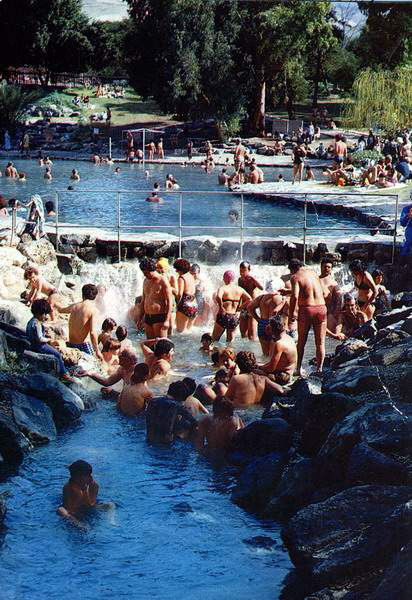
The Hamat Gader Valley is a geographically and politically isolated landscape located in southern Golan Heights, adjacent to the Jordanian border and near the tri-border junction of Israel, Jordan, and Syria. This unique terrain is defined by natural hot springs—formed by the tectonic rift of the Syrian-African fault—that have long drawn people seeking healing and leisure. At the same time, its strategic position has made it a site of shifting sovereignties, reflecting layered histories of imperial, colonial, and national control.


Across the valley, five distinct typologies of bathhouses remain—each a material testimony to a different political era. From Roman thermae and Ottoman hammams to British Mandate pools, Syrian resort structures, and contemporary Israeli spa facilities, these buildings express evolving attitudes toward the body, wellness, and territory. Through architectural analysis, the project examines how each regime shaped spatial and cultural approaches to bathing, transforming hydrotherapy into a reflection of identity, order, and power.


Today, the valley is sharply divided between the sanitized, hyper-controlled environment of the Israeli spa park and the abandoned, overgrown remains of historic bathhouses. While the official resort offers manicured lawns, artificial landscapes, and club cars, places like the derelict "Ein Jonas" hammam remain open and raw—yet are increasingly visited by those seeking a more primal, unmediated encounter with the hot springs. Despite this dichotomy, one constant remains: the magnetic pull of the thermal waters, indifferent to borders, neglect, or infrastructure.


The project proposes a new vision for Hamat Gader: a continuous public park that dismantles physical and symbolic barriers, reconnecting fragmented spaces into a shared landscape. Through minimal interventions—opening circulation routes, restoring ecological water systems, reactivating abandoned bathhouses, and removing fences—the valley is reimagined as a place of coexistence between history and future, nature and architecture. This design celebrates the latent potential of the site: a landscape of care, memory, and healing, flowing freely once again.


Special Thanks:
Shira Inbar
Itay Ayalon Photography
Yarden Cohen
Yotam Cohen
Erez Cohen
Vered Blatman Cohen
Israel national library
Younes & Soraya Nazarian Library University of Haifa
The Golan Archives
Israel Film Service
Israel Railway Heritage Archive
Israel Antiquities Athority
Imperial war museum
The Roman Baths Of Hammat Gader by; Yizhar Hirschfeld
The Jaulân : surveyed for the German Society for the Exploration of the Holy Land; by Schumacher, Gottlieb
Hamat Gader Forgotten History by; Bezalel Lavi
History of the Golan by; Nathan Shor
Mochly Eldar Architects
Ruth Liberty-Shalev Architecture & Conservation